

Laccase in Sustainable Manufacturing | Laccase Enzyme Solutions
How Laccase supports lower-chemical industrial processing across textiles, pulp and paper, wastewater, beverages, and plant-derived materials.
Laccase is one of the cleaner tools in industrial oxidation: it uses molecular oxygen to oxidize phenolic and related substrates, typically leaving water as the main reduction product. For manufacturers trying to reduce harsh chemistry, color discharge, reprocessing, or energy-intensive steps, that mechanism matters.
Laccase Enzyme Solutions supplies laccase to manufacturers working to reduce harsh chemistry, color discharge or reprocessing: textile finishers, pulp and paper mills, wastewater operators, beverage and plant-material processors, and the distributors and resellers who serve them. This page covers where laccase fits, where it does not, and what to validate before scaling.
Wholesale and bulk supply. For manufacturers, distributors and resellers. Send the process and the chemistry you want to reduce, the quantity you need and the destination country; every order is quoted individually. Request a quote
Why Laccase belongs in a sustainability program
Laccase (benzenediol:oxygen oxidoreductase) is a multicopper oxidase. In process terms, it helps move electrons from suitable organic substrates to oxygen. The result can be bleaching, polymerization, coupling, detoxification, or surface modification depending on the substrate and operating environment.
For ESG and process-improvement teams, the value is not a label claim. It is measurable change in the plant:
- lower reliance on aggressive oxidants or reducing agents
- milder processing conditions in selected steps
- reduced color load in difficult effluents
- improved compatibility with bio-based and recycled feedstocks
- fewer secondary chemical residues when the reaction is well designed
- potential consolidation of treatment stages in wastewater or finishing workflows
Where the sustainability gains usually appear
Textile and denim finishing
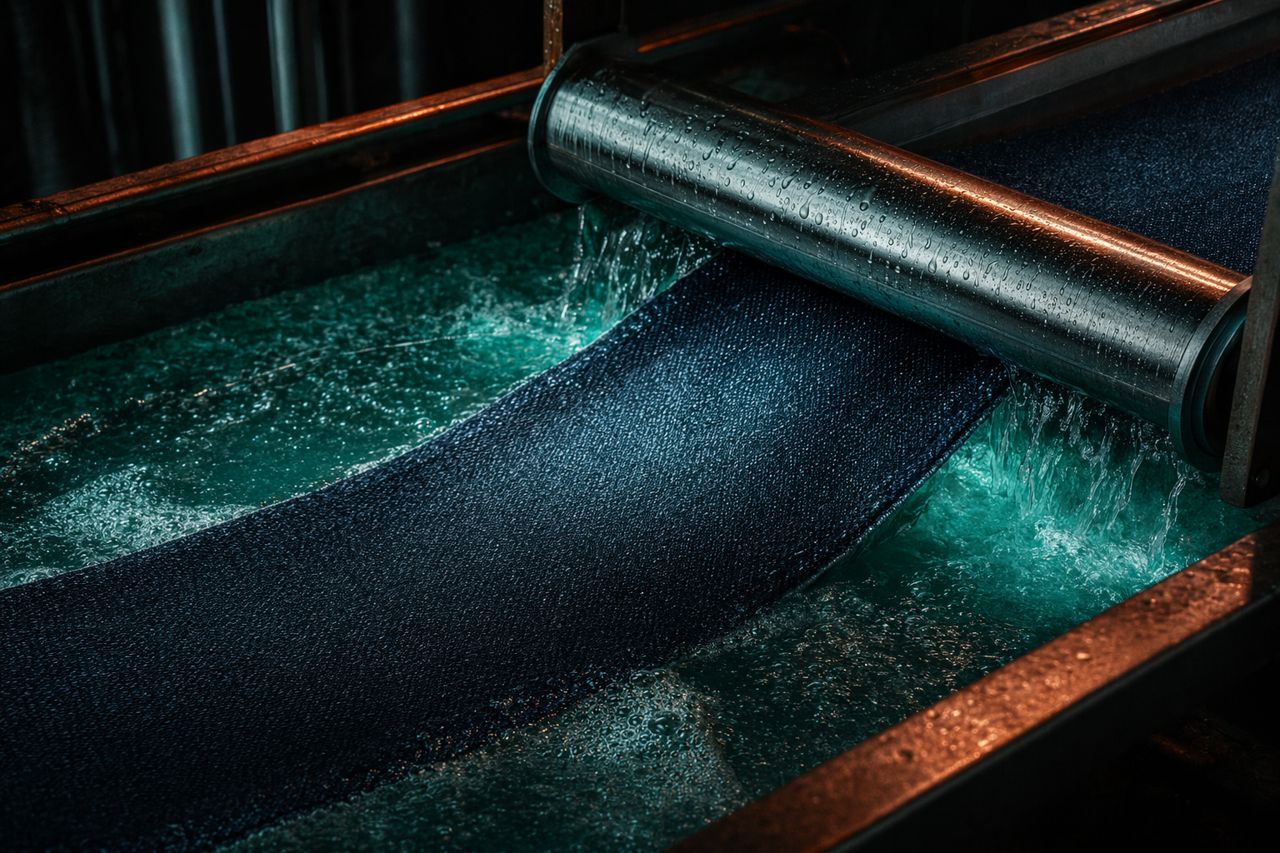
Laccase can support oxidative treatments used in denim processing, shade adjustment, surface effects, and selected fiber-functionalization routes. It is considered where mills want to reduce the burden of harsher bleaching or finishing chemistries while keeping hand feel and fabric integrity under control.
Key development questions include:
- fiber type and blend composition
- dye chemistry and shade target
- bath pH, temperature, liquor ratio, and oxygen transfer
- compatibility with wetting agents, dispersants, salts, and residual auxiliaries
- risk of over-oxidation, back-staining, or uneven shade movement
A successful textile program is usually built around controlled oxidation, not maximum oxidation.
Pulp, paper, and fiber-based packaging
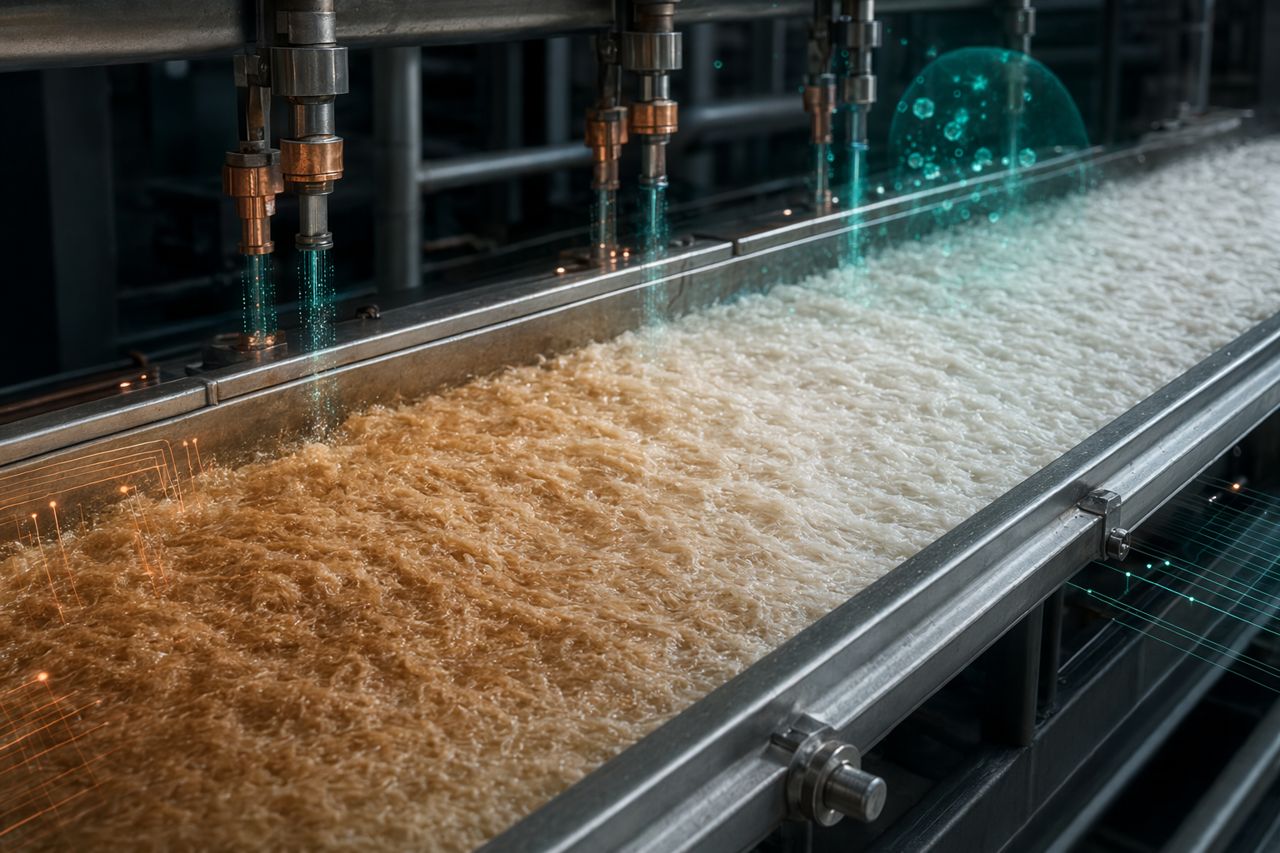
In pulp and paper, Laccase is relevant to biobleaching support, lignin modification, pitch-related challenges, and fiber surface chemistry. It can help reduce chemical intensity in certain sequences, especially when paired with process-specific pretreatment and oxygen availability.
For packaging producers, interest is also growing around renewable fiber streams, recycled-content variability, and lower-impact refining or brightening strategies. The enzyme should be evaluated against brightness, strength properties, drainage behavior, residual color, and downstream chemical demand.
Phenolic wastewater and color management
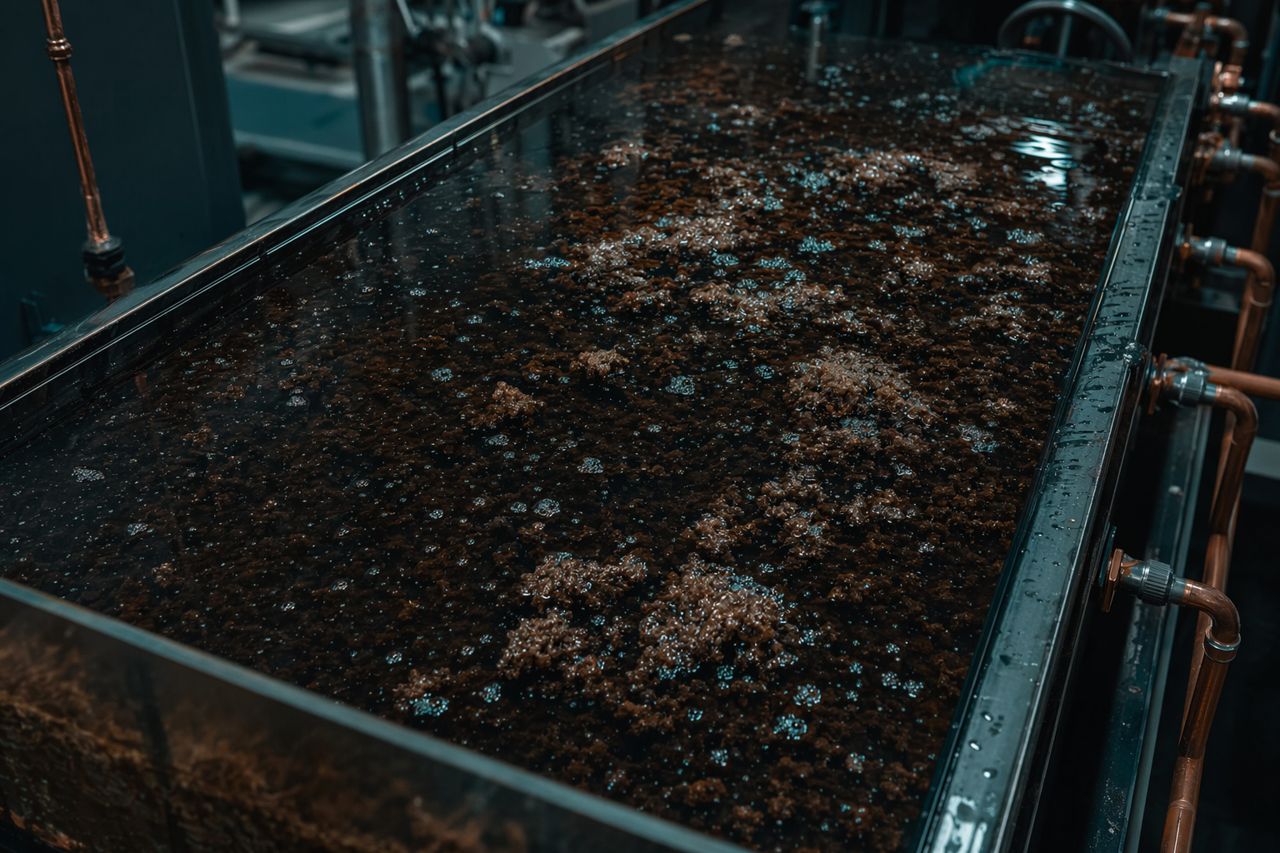
Laccase can oxidize many phenolic compounds and some structurally related color bodies. In treatment systems, this may convert soluble phenolics into larger, less soluble polymers that can be separated more readily by clarification, flotation, filtration, or sludge handling steps.
Typical candidate streams include:
- textile dyehouse effluent fractions
- pulp and paper process water
- plant extract processing wastewater
- olive, tea, coffee, or botanical processing streams
- specialty chemical streams containing phenolic load
The strongest results come when teams identify the target compounds, confirm treatability in the actual matrix, and design separation after oxidation. Enzymatic oxidation is not a substitute for wastewater engineering; it is a tool inside it.
Wine, beverage, and plant extract stabilization
In beverage and botanical processing, Laccase may be used to modify reactive polyphenols and reduce instability linked to haze, browning, or oxidation-prone fractions. The sustainability angle is process selectivity: less reliance on broad chemical correction and more targeted handling of troublesome compounds.
Validation should focus on sensory impact, color shift, filtration performance, product identity, and regulatory fit for the intended market.
Mechanism: oxygen as the working reagent
Laccase contains copper centers that accept electrons from substrates and transfer them to oxygen. The enzyme is most naturally active on phenolic structures, but its reach can be expanded in some systems with suitable mediator chemistry. Mediators can open valuable pathways, but they also introduce procurement, residue, cost, and compliance questions.
For industrial use, the mechanism should be translated into four practical controls:
- Substrate access — the target must be reachable in the fiber, liquor, slurry, extract, or wastewater matrix.
- Oxygen supply — oxidation depends on oxygen availability and mixing, especially in viscous or solids-rich systems.
- Reaction restraint — too much oxidation can create color, loss of performance, off-notes, or polymer deposition.
- Separation plan — when Laccase forms polymers or insoluble material, downstream removal must be engineered.
Operating window considerations
Laccase performance depends strongly on source, formulation, substrate, and matrix. Many industrial systems are developed in acidic to near-neutral conditions, with moderate process temperatures and good oxygen exposure. The exact window should be confirmed with the actual feedstock, not only with model substrates.
Factors that commonly affect performance:
- pH drift during processing
- temperature exposure and hold time
- dissolved oxygen and aeration method
- high salt or surfactant load
- residual peroxide, sulfite, hypochlorite, or reducing agents
- metals, chelators, and process contaminants
- solids content and mass transfer
- required stop point and downstream deactivation strategy
What to measure in a sustainability trial
A credible Laccase project should produce data that process, procurement, sustainability, and quality teams can all use. Recommended trial endpoints include:
- chemical replacement or reduction in the target step
- color removal, shade movement, or brightness change
- effluent color, phenolic content, COD trend, or sludge impact where relevant
- energy change from lower temperature, shorter processing, or fewer stages
- throughput impact and hold-time sensitivity
- product quality: strength, hand feel, filtration, haze, flavor, or stability
- compatibility with existing tanks, pumps, aeration, and separation equipment
- total treatment cost, including enzyme, auxiliaries, utilities, and waste handling
The right benchmark is not simply whether Laccase reacts. The benchmark is whether it improves the manufacturing balance sheet while reducing environmental load.
Formulation and procurement questions
Before requesting pricing, define the operational target clearly. This allows Laccase Enzyme Solutions to recommend the right Laccase format and support a realistic commercial discussion.
Useful details include:
- industry and application area
- liquid, slurry, fiber, extract, or wastewater matrix
- target substrate or problem compound if known
- pH and temperature range of the step
- batch or continuous process
- expected contact time
- current chemistry being reduced or replaced
- quality specifications and unacceptable side effects
- packaging, storage, and delivery requirements
- planned pilot scale and commercial volume range
When Laccase may not be the right first tool
Laccase is powerful, but selective. It may not be the best fit when the target compounds are not oxidizable under practical conditions, when oxygen transfer is severely limited, when the matrix contains strong enzyme inhibitors, or when the process cannot tolerate color formation or polymer deposition.
In those cases, it may still have value as part of a combined approach, but the process design should be honest from the start.
Request a quote for laccase
Laccase Enzyme Solutions supplies laccase wholesale to textile finishers, pulp and paper mills, wastewater operators, beverage and plant-material processors, distributors and resellers. Price, pack size and lead time are quoted per order.
To get a quote, send:
- the process and the chemistry or discharge you want to reduce
- the quantity you need per order, or your expected monthly volume
- the destination country
- liquid or powder preference, and process pH and temperature if known
More from Laccase Enzyme Solutions
Laccase for Bioremediation and Micropollutant Treatment: Bulk Supply | Laccase Enzyme Solutions
Laccase for Biosensors and Functional Materials | Laccase Enzyme Solutions
Laccase for Cosmetic and Personal Care Formulation Research | Laccase Enzyme Solutions
Laccase for Food Processing & Ingredient Modification | Laccase Enzyme Solutions
Laccase for Green Oxidation Chemistry | Laccase Enzyme Solutions
Laccase for Lignin-Based Biomaterials | Laccase Enzyme Solutions
Request pricing & specs
Tell us your application and volume — we reply with pricing and lead time.
We have received your message. We will reply by email.