

Laccase for Lignin-Based Biomaterials | Laccase Enzyme Solutions
Application guidance for using Laccase (benzenediol:oxygen oxidoreductase) to activate lignin, support polymer coupling, modify fiber surfaces, and develop bio-based materials.
Laccase for Lignin-Based Biomaterials
Lignin is not simply a low-value byproduct. In the right process window, it becomes a reactive aromatic feedstock for coatings, binders, composites, films, foams, packaging layers, and fiber-based materials.
Laccase Enzyme Solutions supplies Laccase (benzenediol:oxygen oxidoreductase) for teams developing lignin-based biomaterials where controlled oxidation, radical formation, and polymer coupling matter. The enzyme uses oxygen as the terminal electron acceptor and acts on phenolic structures within lignin and lignin-derived streams, helping convert a difficult variable into a designable material function.
This page is for binder, coating, composite, packaging and fiber-material manufacturers, biorefineries, materials developers, distributors and resellers who need a laccase supply for lignin-based products, from development lots to production volumes.
Wholesale and bulk supply. For manufacturers, distributors and resellers. Send the material or lignin stream, the quantity you need and the destination country; every order is quoted individually. Request a quote
What laccase does in lignin systems
Laccase catalyzes one-electron oxidation of phenolic substrates. In lignin-rich systems, this can generate phenoxy radicals that proceed into coupling, grafting, crosslinking, or molecular weight growth depending on substrate structure, solids level, mediator strategy, oxygen transfer, and process timing.
For biomaterial development, that mechanism can support:
- Lignin activation before blending, extrusion, casting, coating, or curing.
- Polymer coupling between lignin fractions and compatible phenolic or amine-bearing components.
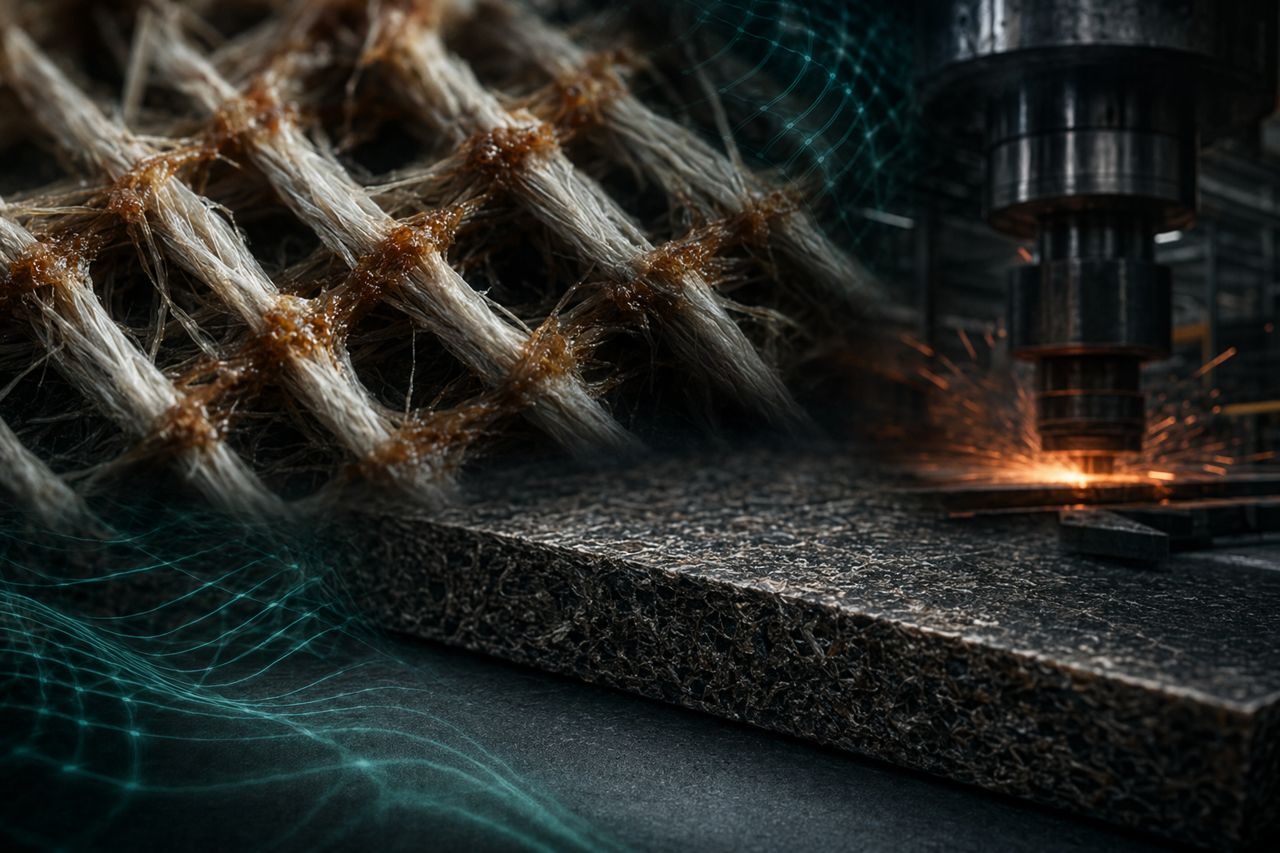
- Fiber surface modification for pulp, cellulose, natural fibers, and lignocellulosic fillers.
- Bio-based binder formation for boards, molded fiber, nonwovens, and composite mats.
- Barrier and coating development where oxidative coupling can improve cohesion and water interaction.
- Phenolic stream upgrading when lignin derivatives need higher functionality or separability.
The commercial value is not oxidation for its own sake. It is the ability to tune reactivity without relying solely on harsh chemistry.
Where laccase fits
Lignin activation before material formation
Many lignins are chemically diverse, with differences driven by feedstock, pulping chemistry, fractionation, drying history, ash, sulfur content, and phenolic hydroxyl availability. Laccase is used when development teams need to increase lignin reactivity before the material is shaped.
Typical objectives include improved binding, stronger network formation, higher aromatic contribution, reduced need for petrochemical crosslinkers, or better integration with cellulose-rich structures.
Fiber and filler surface functionalization
In fiber-based biomaterials, laccase can help modify lignocellulosic surfaces under aqueous conditions. This is relevant when teams want better lignin-cellulose interaction, surface cohesion, coating holdout, or wet-web behavior without over-processing the fiber.
Applications include molded fiber packaging, specialty papers, natural fiber composites, agricultural fiber panels, and hybrid bio-based laminates.
Enzymatic coupling and grafting
Laccase can promote coupling between lignin and suitable co-substrates. Depending on the formulation, these may include phenolic additives, tannins, lignin derivatives, plant polyphenols, selected amine-containing structures, or functional polymers designed for oxidative grafting.
For harder-to-oxidize targets, a mediator strategy may be considered. Laccase Enzyme Solutions supports early screening discussions around substrate fit, mediator compatibility, downstream restrictions, and the practical trade-off between reactivity and formulation complexity.
Practical formulation considerations
Substrate matters first
The same laccase can behave differently across kraft lignin, organosolv lignin, soda lignin, lignosulfonates, hydrolysis lignin, black liquor fractions, and depolymerized lignin oils. Before scale-up, define the lignin source, dry solids, ash, sulfur profile, solubility, particle size, and target material property.
A good development brief should answer:
- Is the lignin soluble, dispersed, or surface-bound?
- Is the goal coupling, grafting, color shift, viscosity change, or wet strength contribution?
- Will the enzyme act before, during, or after material formation?
- Are residual mediators or additives acceptable in the final product?
- What downstream step will stop, dry, press, cure, or immobilize the reaction?
Operating window
Laccase systems generally favor mildly acidic to near-neutral aqueous environments, with performance shaped by pH, temperature, oxygen availability, lignin accessibility, shear, and residence time. Many biomaterial processes evaluate laccase between ambient and moderately elevated temperatures, then lock the window around material handling constraints rather than enzyme preference alone.
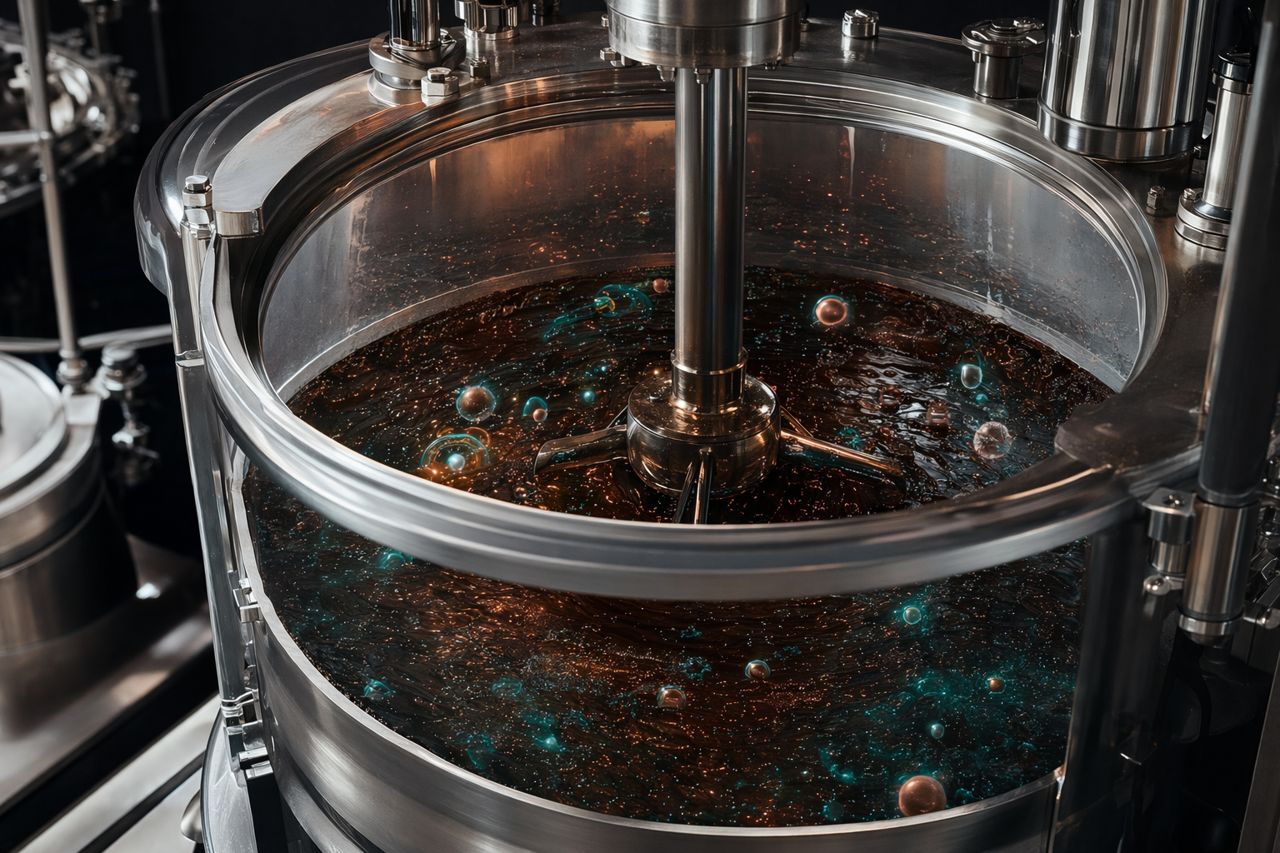
For process teams, oxygen transfer is often as important as enzyme addition. Insufficient air exposure, high viscosity, poor mixing, or overly dense solids can suppress the radical chemistry needed for coupling. Conversely, excessive oxidation can shift color, increase brittleness, or overbuild molecular weight before forming.
Process placement
Laccase can be evaluated in several process positions:
- Pre-activation tank — lignin is treated before blending with fibers, polymers, fillers, or minerals.
- Inline blend step — enzyme meets lignin during controlled mixing before casting, coating, or pressing.
- Fiber treatment stage — laccase modifies lignocellulosic surfaces before sheet, board, or mat formation.
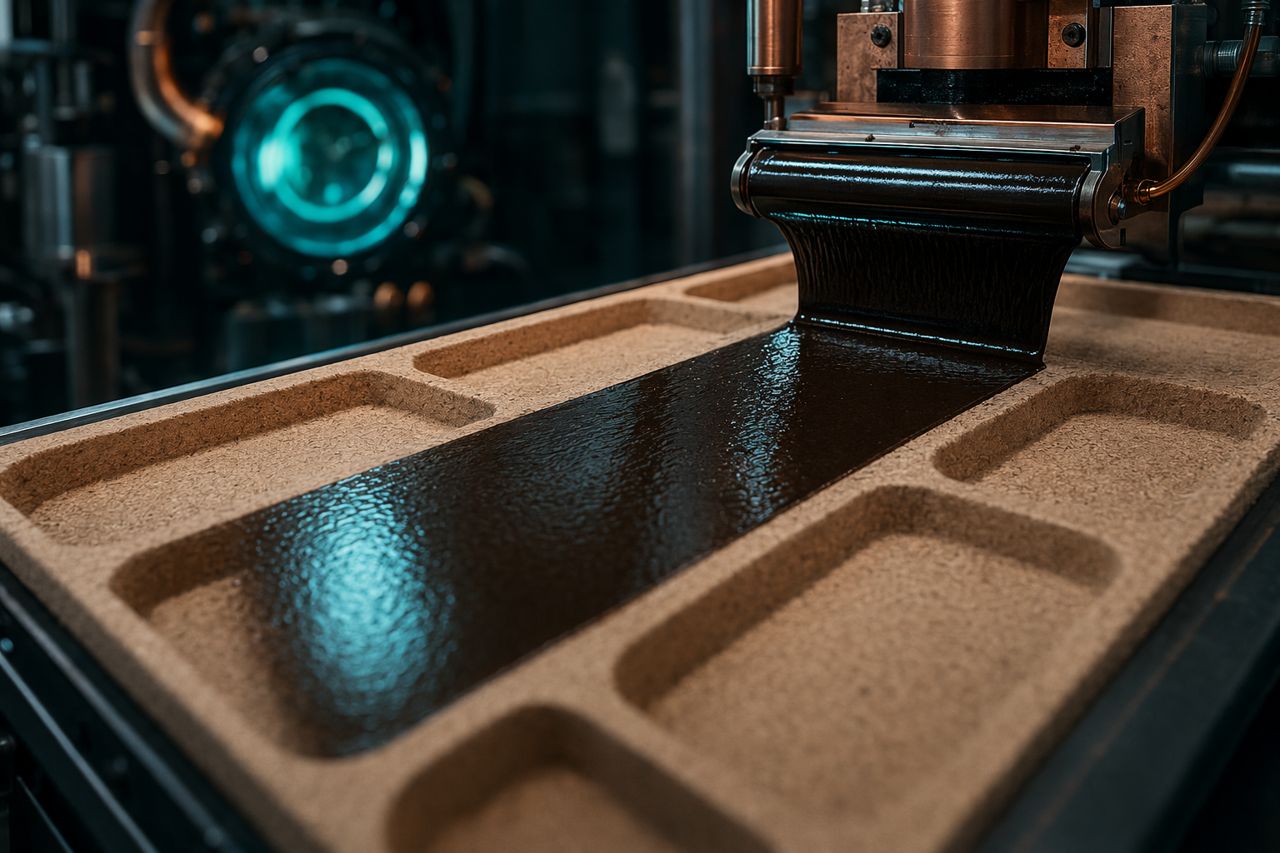
- Coating kitchen — lignin-based coating components are activated before application.
- Post-application reaction — oxidative coupling continues briefly after deposition, before drying or thermal set.
The best placement depends on whether the material property is built in the liquid phase, at an interface, or during consolidation.
Target outcomes for lignin biomaterials
Laccase is selected by teams pursuing measurable formulation improvements, such as:
- Increased bio-based aromatic content.
- Improved cohesion in lignin-containing binders.
- Better fiber-to-matrix interaction.
- Lower dependence on fossil-derived phenolic chemistry.
- Controlled viscosity build for coatings or binders.
- Enhanced wet or dry strength contribution in fiber systems.
- Improved compatibility between lignin and polysaccharide-rich substrates.
- Tunable color development where darker natural aesthetics are acceptable or desired.
Not every lignin stream is a good candidate. Low phenolic availability, heavy contamination, poor dispersion, incompatible pH, oxygen limitation, or aggressive downstream chemistry can restrict performance. Laccase Enzyme Solutions helps screen these constraints early so development work does not drift into avoidable trial-and-error.
Procurement and scale-up notes
For procurement teams, the important question is not only enzyme price. It is whether the laccase can be integrated into a repeatable material process with stable supply, predictable handling, and enough technical context to support pilot decisions.
When requesting pricing, include the lignin type, target material, process temperature, pH, solids level, batch or continuous format, and whether mediators or co-substrates are under consideration. This allows Laccase Enzyme Solutions to respond with a more relevant recommendation for evaluation planning.
Request a quote for laccase
Laccase Enzyme Solutions supplies laccase wholesale to materials manufacturers, biorefineries, binder and coating producers, packaging and fiber companies, distributors and resellers. Price, pack size and lead time are quoted per order.
To get a quote, send:
- the material or lignin stream and the target property (binding, coating, crosslinking or surface change)
- the quantity you need per order, or your expected monthly volume
- the destination country
- liquid or powder preference, and process pH and temperature if known
More from Laccase Enzyme Solutions
Laccase for Bioremediation and Micropollutant Treatment: Bulk Supply | Laccase Enzyme Solutions
Laccase for Biosensors and Functional Materials | Laccase Enzyme Solutions
Laccase for Cosmetic and Personal Care Formulation Research | Laccase Enzyme Solutions
Laccase for Food Processing & Ingredient Modification | Laccase Enzyme Solutions
Laccase for Green Oxidation Chemistry | Laccase Enzyme Solutions
Laccase for Paper Mill Effluent Treatment | Laccase Enzyme Solutions
Request pricing & specs
Tell us your application and volume — we reply with pricing and lead time.
We have received your message. We will reply by email.