

Laccase for Green Oxidation Chemistry | Laccase Enzyme Solutions
Application-led guidance on using Laccase (benzenediol:oxygen oxidoreductase) for selective oxidation, coupling, grafting, and lower-hazard green chemistry development.
Laccase gives process developers a cleaner way to run oxidative chemistry when the target substrate can be activated through oxygen-driven electron transfer. Instead of relying on heavy-metal oxidants, peroxide-heavy systems, or harsh reaction conditions, Laccase (benzenediol:oxygen oxidoreductase) uses molecular oxygen as the terminal electron acceptor and converts suitable aromatic substrates into reactive radical intermediates.
For green chemistry teams, the value is practical: selective oxidation, oxidative coupling, grafting, polymer formation, color-body management, lignin and phenolic upgrading, and lower-hazard route development under aqueous or aqueous-organic conditions.
Laccase Enzyme Solutions supplies laccase to specialty chemical manufacturers, process development groups, contract manufacturers, distributors and resellers running industrial oxidation programs where performance, reproducibility and downstream separation matter. We help with grade selection and screening strategy, and supply is quoted per order.
Wholesale and bulk supply. For manufacturers, distributors and resellers. Send the reaction or application, the quantity you need and the destination country; every order is quoted individually. Request a quote
Why laccase belongs in green oxidation development
Laccase is a multicopper oxidoreductase that transfers electrons from suitable donor substrates to oxygen. Water is the principal reduction product of oxygen, which makes the enzyme attractive when the objective is to reduce stoichiometric oxidants and simplify waste handling.
In application terms, laccase is useful when you want to:
- Oxidize phenolic, anilinic, catecholic, hydroquinone, or lignin-derived structures
- Generate controlled radical intermediates for coupling or polymerization
- Graft functional groups onto bio-based polymers, fibers, or aromatic matrices
- Develop milder alternatives to metal-salt, peroxide, or hypochlorite oxidation systems
- Explore mediator-enabled oxidation where the target is less directly accessible
- Improve process safety by lowering oxidant inventory and reaction severity
The enzyme is not a universal oxidant. Its fit depends on substrate redox behavior, solubility, pH response, oxygen transfer, competing side reactions, and the desired product distribution. The strongest programs treat laccase as a controllable process tool, not a drop-in reagent.
Mechanism in process language
Laccase oxidizes electron-rich substrates by one-electron transfer. The substrate forms a radical species, and the enzyme passes the electrons through its copper centers to oxygen. Those radicals can then follow several routes:
- Coupling: radical-radical reactions form dimers, oligomers, or higher structures
- Polymerization: phenolic or aromatic monomers build larger materials
- Grafting: activated intermediates attach to surfaces, fibers, polysaccharides, lignin, or other matrices
- Selective transformation: targeted oxidation changes functional behavior without aggressive bulk degradation
- Precipitation or separability shifts: oxidation can turn dissolved phenolics into larger, more removable species
Mediator chemistry can extend the oxidation range, but it must be selected carefully. A mediator can improve conversion for challenging substrates, but it may also affect selectivity, regulatory position, color, odor, residue profile, and cost.
Where laccase is used in green chemistry routes
Bio-based polymer and resin development
Laccase can couple phenolic monomers, lignin fragments, tannins, catechols, and other aromatic building blocks into higher-value materials. This is relevant for bio-based adhesives, coatings, binders, and specialty polymers where controlled oxidative coupling is preferred over harsher chemical initiation.
Key development questions include monomer purity, coupling pattern, viscosity build, gel risk, final color, and compatibility with fillers or formulation aids.
Lignin and plant-derived feedstock upgrading
Lignin-rich streams contain diverse aromatic structures. Laccase can help modify phenolic functionality, alter molecular weight distribution, improve reactivity, or change binding behavior. In some programs, the objective is functionalization; in others, it is selective removal, clarification, or preparation for downstream conversion.
Because lignin streams vary widely by source and pretreatment method, screening should use the actual process stream rather than a simplified model compound alone.
Oxidative grafting and surface functionalization
Laccase can activate phenolic groups that then bond to fibers, films, biopolymers, or particulate surfaces. This can support functional finishes, improved adhesion, antioxidant attachment, color modification, and surface reactivity without moving directly to more aggressive chemical treatments.
Important variables include surface accessibility, moisture level, oxygen availability, mediator choice, and whether unbound reaction products can be washed or separated efficiently.
Selective oxidation in aqueous or mixed-solvent systems
Many laccase programs start in water, then move into mixed systems to handle substrate solubility. The enzyme may tolerate a defined organic co-solvent fraction depending on solvent identity, exposure time, temperature, and formulation. The goal is not to maximize solvent content; it is to create enough solubility and mass transfer while preserving enzyme performance.
Lower-hazard route replacement
When an existing oxidation step uses a strong oxidant, creates difficult salt load, or requires aggressive pH and temperature, laccase may offer a lower-hazard alternative. The strongest candidates are reactions where partial oxidation, controlled coupling, or radical-mediated modification is acceptable or desired.
Practical operating window
Initial development is typically built around mild process conditions and then tightened through screening. Useful starting territory often includes:
- Mildly acidic to near-neutral pH, commonly explored across roughly pH 4–7
- Ambient to moderate process temperatures, often screened in the 25–55°C range
- Aqueous media first, followed by solvent-tolerant screening if solubility requires it
- Controlled oxygen availability through headspace, aeration, sparging, or mixing strategy
- Substrate concentrations matched to solubility, viscosity, and heat-removal requirements
- Residence time set by conversion profile, selectivity, and downstream separability
Avoid judging laccase only by early conversion. In green oxidation chemistry, the more important question is whether the enzyme creates a usable product distribution with a downstream path that is cleaner than the incumbent route.
What to screen before scale-up
A well-designed laccase screen should answer commercial questions early.
Substrate fit
Confirm whether the target substrate is directly oxidizable or requires a mediator. Include real feedstock impurities when possible, because salts, residual solvents, preservatives, metals, surfactants, and reducing agents can change performance.
Selectivity and side reactions
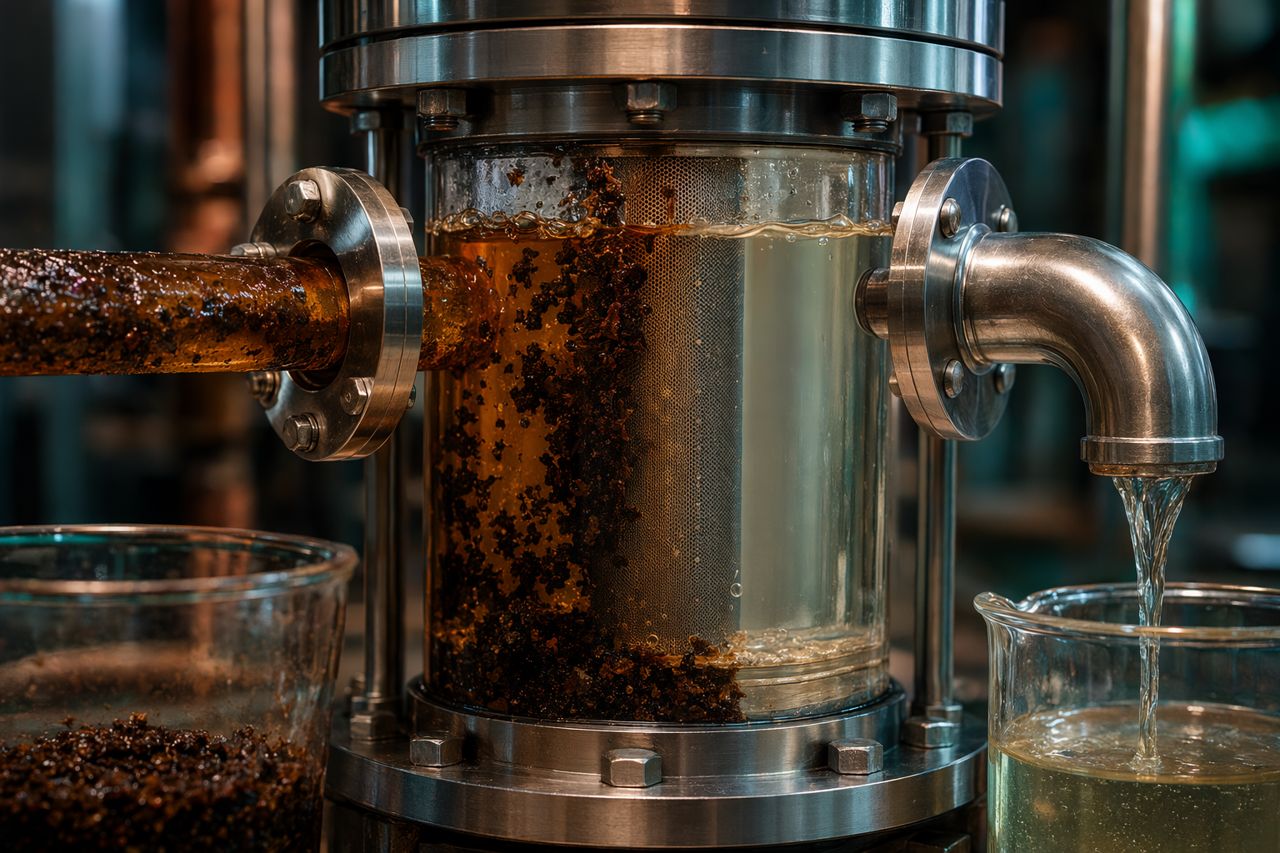
Track whether the desired product forms cleanly or whether the system moves toward uncontrolled darkening, over-coupling, insoluble tar formation, or broad molecular weight growth.
Oxygen transfer
Laccase depends on oxygen. A lab vial with generous headspace may not predict a production vessel. Mixing, surface area, sparging approach, foam control, and viscosity should be evaluated as part of process translation.
pH drift and buffering
Oxidation and feedstock composition can shift pH. Enzyme performance, radical chemistry, and product stability may all move with pH, so control strategy matters.
Product recovery
Green oxidation only creates value if separation is workable. Evaluate filtration, precipitation, membrane behavior, solvent extraction, adsorption, or direct formulation compatibility before locking the route.
Residue and compliance profile
For specialty chemical, textile, paper, food-adjacent, cosmetic-adjacent, or agricultural inputs, the acceptable residue profile can shape enzyme format, mediator use, and purification requirements.
Formulation and supply considerations
Laccase Enzyme Solutions can support laccase programs in development and production planning with attention to:
- Liquid or dry enzyme format preference
- Compatibility with process water, salts, co-solvents, and formulation aids
- Batch-to-batch consistency expectations
- Storage temperature, handling, and shelf-life requirements
- Low-foam or low-color constraints where relevant
- Pilot quantity planning and commercial supply cadence
- Documentation needs for procurement, quality, and regulatory review
No single laccase format is best for every oxidation route. The right choice depends on substrate class, reaction medium, plant handling preferences, and the downstream specification.
When laccase is a strong candidate
Consider laccase when your process has at least one of these characteristics:
- The substrate contains phenolic, aromatic amine, catechol, hydroquinone, or lignin-like functionality
- The desired chemistry involves coupling, grafting, polymerization, or selective aromatic oxidation
- Existing oxidation creates high salt load, difficult effluent, safety burden, or product damage
- Milder reaction conditions could improve selectivity or reduce cleanup
- Oxygen-driven chemistry supports the sustainability case for the final product
- The product can tolerate, benefit from, or control radical-mediated transformation
When to be cautious
Laccase may not be the best fit if the target molecule is poorly soluble, has a redox profile outside the enzyme’s practical range, requires a tightly defined single product without radical side paths, or cannot tolerate color formation. These issues do not always rule out the enzyme, but they should be surfaced in the first screening plan.
Development path with Laccase Enzyme Solutions
A typical laccase oxidation program moves through four decisions:
- Substrate and route review — target transformation, feed composition, incumbent chemistry, and success criteria
- Screening design — pH, temperature, oxygen transfer, substrate loading, mediator options, and sampling plan
- Pilot translation — mixing, aeration, foam, residence time, separability, and product specification
- Supply alignment — enzyme format, packaging, documentation, lead time, and recurring demand profile
This structure helps technical and procurement teams evaluate laccase on the same basis: process value, not isolated bench performance.
Request a quote for laccase
Laccase Enzyme Solutions supplies laccase wholesale to specialty chemical manufacturers, process development groups, contract manufacturers, distributors and resellers. Price, pack size and lead time are quoted per order.
To get a quote, send:
- what you need to oxidize, couple or graft, and the solvent system
- the quantity you need per order, or your expected monthly volume
- the destination country
- liquid or powder preference, and process pH and temperature if known

More from Laccase Enzyme Solutions
Laccase for Bioremediation and Micropollutant Treatment: Bulk Supply | Laccase Enzyme Solutions
Laccase for Biosensors and Functional Materials | Laccase Enzyme Solutions
Laccase for Cosmetic and Personal Care Formulation Research | Laccase Enzyme Solutions
Laccase for Food Processing & Ingredient Modification | Laccase Enzyme Solutions
Laccase for Lignin-Based Biomaterials | Laccase Enzyme Solutions
Laccase for Paper Mill Effluent Treatment | Laccase Enzyme Solutions
Request pricing & specs
Tell us your application and volume — we reply with pricing and lead time.
We have received your message. We will reply by email.