

How to Specify and Qualify a Laccase Supply for an Industrial Process | Laccase Enzyme Solutions
What to specify, test and document when qualifying a laccase supply for textile, pulp and paper, wastewater, food and materials processes, from screening to repeat supply.
Qualifying a laccase supply for an industrial process is a technical decision as much as a purchasing one. The right grade depends on the substrate you need to oxidize, your process conditions, the delivery format your operators can handle, which documents are available for the grade, and how predictable repeat supply has to be.
This guide is for the teams that sign off a supply: process engineers, formulators, sourcing and purchasing staff at textile and denim finishers, pulp and paper mills, wastewater treatment providers, food, beverage and extract processors, materials developers, and the distributors and resellers who serve them. It sets out what to specify, what to test and what to send with an inquiry.
Wholesale and bulk supply. Laccase Enzyme Solutions supplies laccase to manufacturers, distributors and resellers. Send the application, the quantity you need and the destination country; every order is quoted individually. Request a quote
What laccase does in industrial processes
Laccase is a copper-containing oxidoreductase that uses oxygen to drive oxidation of phenolic and related aromatic substrates. In many applications, the process value comes from one of three outcomes:
- Polymerization or coupling of phenolic compounds into larger, less soluble structures
- Color modification through oxidation of dye structures, chromophores, or natural pigments
- Stabilization by reducing reactive phenolic load, haze-forming potential, or oxidative instability
The byproduct of the oxygen-reduction side of the reaction is water, which makes laccase attractive where buyers are trying to reduce reliance on harsher chemical oxidants. In some systems, mediators or process aids are used to extend substrate reach; these should be evaluated carefully for cost, compliance, residue profile, and downstream separation.
Supply formats to choose between
Liquid laccase concentrate
Liquid formats are often preferred when the plant already uses pumped dosing, inline blending, or short-to-medium storage cycles. They can simplify dispersion and reduce dust handling. Buyers should confirm viscosity, preservative system, freeze sensitivity, container compatibility, and whether the product tolerates recirculation or automated dosing equipment.
Best fit:
- Textile and wet-processing lines
- Pulp, paper, and fiber modification systems
- Wastewater treatment pilots and continuous dosing trials
- Plants with liquid additive infrastructure
Powder or granular laccase
Dry formats can be attractive where longer storage, export logistics, reduced shipping weight, or premix manufacturing are important. Handling controls matter: dust management, humidity protection, operator exposure procedures, and clean transfer into aqueous systems should be defined before scale-up.
Best fit:
- Premix and dry-blend manufacturing
- Distributed regional warehousing
- Batch operations with controlled make-down tanks
- Customers prioritizing storage density and transport efficiency
Stabilized or application-adjusted blends
Some buyers need a laccase format designed around pH profile, substrate class, salt tolerance, surfactant compatibility, or integration with other process ingredients. These blends are typically specified after application screening rather than chosen from a generic catalog description.
Best fit:
- Formulations with surfactants, dispersants, or chelants
- Acidic to mildly neutral processing conditions
- Systems with variable feedstock composition
- Long qualification cycles where lot consistency matters
Application fit: where laccase is usually evaluated
Textiles and denim processing
Laccase is evaluated for oxidative color modification, denim finishing, indigo-related processing, and controlled surface effects. The most important buying questions are fabric type, dye chemistry, bath composition, pH, temperature profile, contact time, abrasion requirements, and whether the enzyme is used alone or with a mediator system.
Procurement note: textile buyers should request a format that matches their dosing method and plant safety requirements, especially if switching from small lab packs to drums, totes, or palletized dry material.
Pulp, paper, and fiber modification
In pulp and paper workflows, laccase may be evaluated for lignin modification, brightness-related treatment strategies, pitch and stickies management, or fiber surface functionalization. The feedstock variability is often as important as the enzyme itself.
Procurement note: ask whether the proposed grade has been screened against your pulp type, chemical carryover, process pH, and residence time. A quote without this context may not reflect the grade you will actually need.
Phenolic wastewater and effluent treatment
Laccase can help convert certain phenolic contaminants into larger oxidized products that may be easier to separate, settle, filter, or capture. Performance depends heavily on the contaminant mix, competing organics, oxygen availability, solids load, and downstream treatment design.
Procurement note: a supply order should follow a representative wastewater screen. A clear sample is not enough; the enzyme should be tested against real variation from the plant.
Wine, juice, tea, and botanical extracts
For beverage and extract processors, laccase is considered where phenolic management, color stability, haze reduction, or oxidative stabilization are part of the process objective. Regulatory status, residue expectations, allergen statements, and processing aid documentation are central to the buying decision.
Procurement note: confirm food-contact suitability and documentation before pricing a commercial lot. The lowest industrial grade is not necessarily the right grade for extract or beverage use.
Biopolymers, materials, and specialty chemistry
Laccase is used in research-to-commercial pathways for phenolic coupling, surface activation, lignin valorization, adhesive systems, coatings, and bio-based material development. These projects often require tighter technical dialogue because the substrate may be proprietary.
Procurement note: if your substrate is confidential, describe it by functional class, solvent system, pH, temperature, and downstream constraints. A non-disclosure workflow can support more precise grade selection.
Operating window considerations
Laccase performance is process-specific, but buyers commonly screen within acidic to mildly neutral pH conditions and moderate process temperatures. Some grades are selected for stability in warmer, more demanding environments; others are chosen for better behavior in gentler, formulation-sensitive systems.
Before requesting a commercial quote, define:
- Target substrate or contaminant class
- Process pH and allowed adjustment range
- Operating temperature profile, including heat holds or cleaning exposure
- Contact time or residence time
- Oxygen availability or aeration conditions
- Presence of surfactants, salts, chelants, preservatives, solvents, or oxidants
- Downstream separation, filtration, drying, or inactivation step
- Regulatory or customer documentation requirements
Do not assume two laccase grades will behave the same because they share the same enzyme name. Source organism, purification level, stabilizers, and format can all change practical performance.
What shapes a laccase quote
A quote reflects more than volume. The main factors are:
- Format — liquid, powder, granular, or application-adjusted blend
- Grade requirements — industrial, technical, food-processing, or project-specific documentation
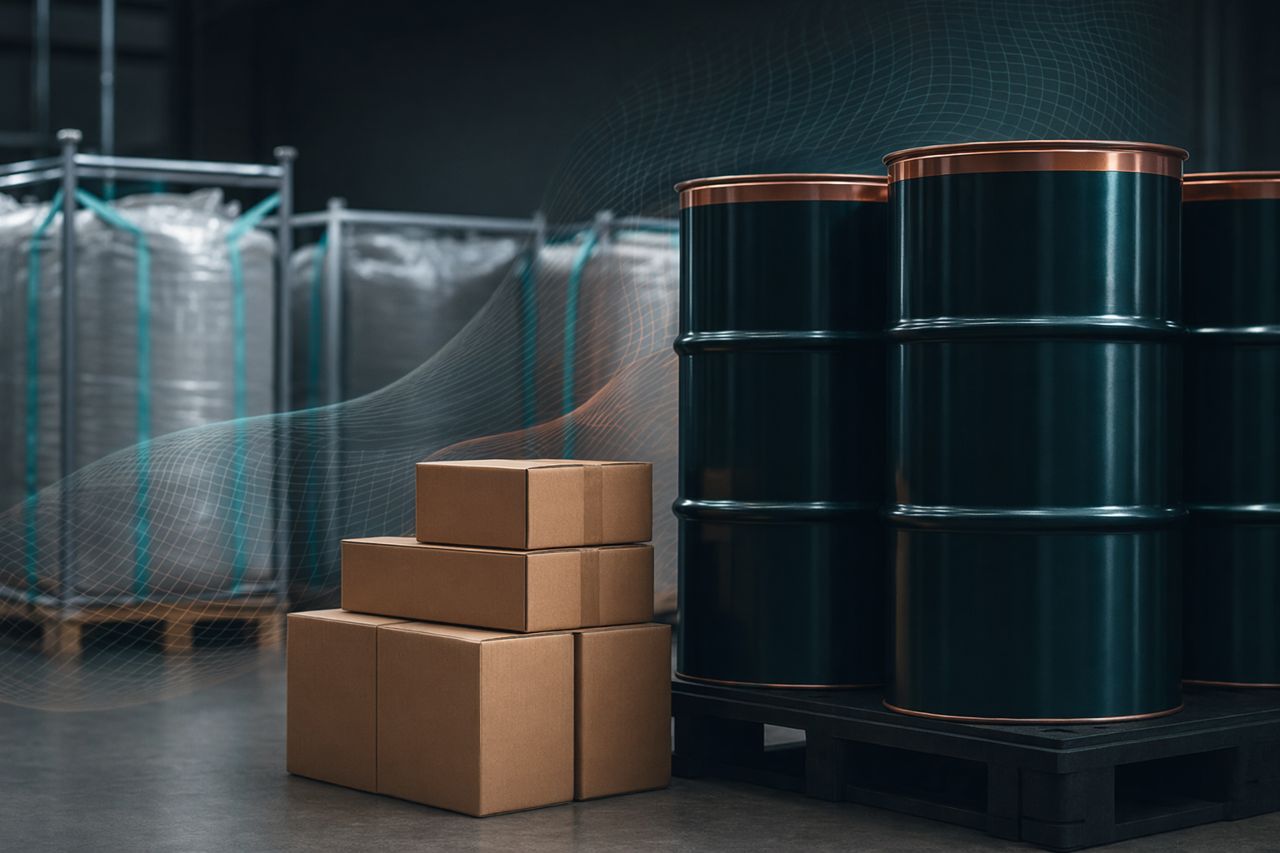
- Packaging — bottles, jerrycans, drums, liners, cartons, pallets, totes, or export-ready configurations
- Stability package — preservatives, carriers, moisture protection, or cold-chain requirements
- Lot reservation — whether you need one-time supply or capacity held for repeat orders
- Lead time — standard production versus accelerated fulfillment
- Documentation — COA, SDS, allergen, origin, regulatory, customs, or customer-specific declarations
- Application support — screening guidance, compatibility review, and scale-up troubleshooting
For an accurate quote, share the intended use and target annual demand range rather than asking only for the largest possible pack size. The best commercial structure may be a staged supply plan: evaluation material, pilot lot, first production lot, then scheduled replenishment.
Order staging and scale-up planning
Order size should follow the risk profile of the application. Laccase Enzyme Solutions typically helps buyers think in four stages:
1. Technical screening
Use a representative sample of substrate, process water, formulation components, or effluent. The goal is not to prove only that laccase reacts; it is to identify which grade and format survive the real process environment.
2. Pilot validation
Move from bench conditions to plant-relevant mixing, dosing, residence time, and downstream handling. This stage should reveal foaming, filtration, color drift, odor changes, separation behavior, and compatibility with existing equipment.
3. First commercial lot
Select packaging that operators can handle safely and consistently. Confirm storage location, dispensing method, batch records, change-control requirements, and quality release timing.
4. Repeat supply
For ongoing use, align forecast, shelf-life expectations, safety stock, and order cadence. If your plant has seasonal campaigns or feedstock variation, build that into the supply plan.
Packaging and logistics questions to decide early
Before asking for a quote, decide what the plant can actually receive and use:
- Do you need liquid drums, smaller handling packs, dry cartons, or palletized supply?
- Is temperature-controlled transport required for your selected grade?
- Can your warehouse protect dry enzyme from humidity?
- Are there restrictions on preservatives, carriers, or animal-origin materials?
- Does your EHS team require low-dust handling or closed transfer?
- Do you need export documentation or country-specific declarations?
- Should the lot be split across multiple shipments or delivered in one release?
A technically suitable enzyme can still fail commercially if the packaging does not match the plant’s receiving, storage, and dosing reality.
Quality and documentation checklist
When qualifying a laccase supply, request a documentation set that matches your market and risk level. Typical items include:
- Certificate of analysis with agreed release characteristics
- Safety data sheet
- Product specification sheet
- Recommended storage and handling guidance
- Lot traceability information
- Allergen, animal-origin, or food-processing declarations where applicable
- Customs and transport documentation where required
- Change notification expectations for repeat supply
For regulated or customer-audited applications, define documentation requirements before the first quote. Retrofitting compliance after a technical win can delay launch.
How to compare laccase suppliers
A useful supplier conversation should move quickly from enzyme name to application fit. When comparing options, look for:
- Clear discussion of substrate class and process constraints
- Willingness to recommend a format, not just a pack size
- Practical guidance on storage, dosing, and compatibility
- Lot-to-lot consistency expectations
- Documentation aligned with your end market
- Scalable packaging and repeat supply planning
- Responsiveness to technical and procurement teams alike
A laccase supply is qualified when technical performance, handling, compliance, and supply reliability are specified together.
Information to include in a quote request
To get an accurate quote quickly, include the following in your inquiry:
- Application area and target outcome
- Substrate, feedstock, fabric, pulp, extract, effluent, or formulation type
- Process pH, temperature profile, and contact time
- Liquid or dry format preference
- Trial quantity, first commercial quantity, and estimated repeat demand
- Required packaging format
- Destination country and delivery timeline
- Documentation requirements
- Any restricted ingredients, preservatives, carriers, or compliance constraints
If details are confidential, provide ranges and functional descriptions. Laccase Enzyme Solutions can still narrow the format and quoting path without requiring disclosure of your full formulation at the first contact.
Buyer takeaway
Laccase should be qualified as a process input, not a generic commodity. Start with the oxidation objective, define the plant conditions, choose a format that operators can handle, and request documentation that fits the end market. When those pieces are aligned, laccase becomes a controlled industrial tool: oxygen-driven, selective, and scalable.
Request a quote for laccase
Laccase Enzyme Solutions supplies laccase wholesale to manufacturers, mills, treatment providers, processors, formulators, distributors and resellers. Price, pack size and lead time are quoted per order.
To get a quote, send:
- the product or application, and the target outcome
- the quantity you need per order, or your expected monthly volume, and your buying stage (screening, pilot, first commercial lot or repeat supply)
- the destination country
- liquid or powder preference, packaging needs, and process pH and temperature if known
More from Laccase Enzyme Solutions
Laccase for Bioremediation and Micropollutant Treatment: Bulk Supply | Laccase Enzyme Solutions
Laccase for Biosensors and Functional Materials | Laccase Enzyme Solutions
Laccase for Cosmetic and Personal Care Formulation Research | Laccase Enzyme Solutions
Laccase for Food Processing & Ingredient Modification | Laccase Enzyme Solutions
Laccase for Green Oxidation Chemistry | Laccase Enzyme Solutions
Laccase for Lignin-Based Biomaterials | Laccase Enzyme Solutions
Request pricing & specs
Tell us your application and volume — we reply with pricing and lead time.
We have received your message. We will reply by email.