

Laccase for Textile Finishing and Denim Processing | Laccase Enzyme Solutions
Application guidance for laccase in denim wash-down, oxidative color modification, dye decolorization, and lower-impact textile finishing.
Laccase (benzenediol:oxygen oxidoreductase) gives textile teams a controlled oxidative tool for color work. In denim and garment processing, it can support targeted indigo modification, wash-down development, backstaining control strategies, and treatment of selected dyehouse streams where aromatic color bodies are present.
Laccase Enzyme Solutions supplies laccase to denim mills, garment laundries, textile finishers, textile chemical formulators, distributors and resellers who need an enzyme they can test against real fabric constructions, shade targets, bath chemistry, machine conditions and production costs. Every order is quoted individually.
Wholesale and bulk supply. For manufacturers, distributors and resellers. Send the fabric type and target effect, the quantity you need and the destination country; every order is quoted individually. Request a quote
Why laccase belongs in a textile process toolbox
Laccase uses dissolved oxygen as the terminal oxidant. Its copper-active site enables electron transfer from suitable phenolic and aromatic substrates, generating reactive intermediates that can couple, polymerize, or become easier to separate depending on the system design.
For textile finishing, this means laccase can help deliver oxidative effects without building the entire process around harsher chemical oxidants. It is not a universal bleach and it is not a drop-in substitute for every denim chemistry. It is a process tool that performs best when substrate access, oxygen availability, pH, auxiliaries, and rinse/deactivation steps are engineered together.
Key textile and denim use cases
Denim shade adjustment and wash-down support
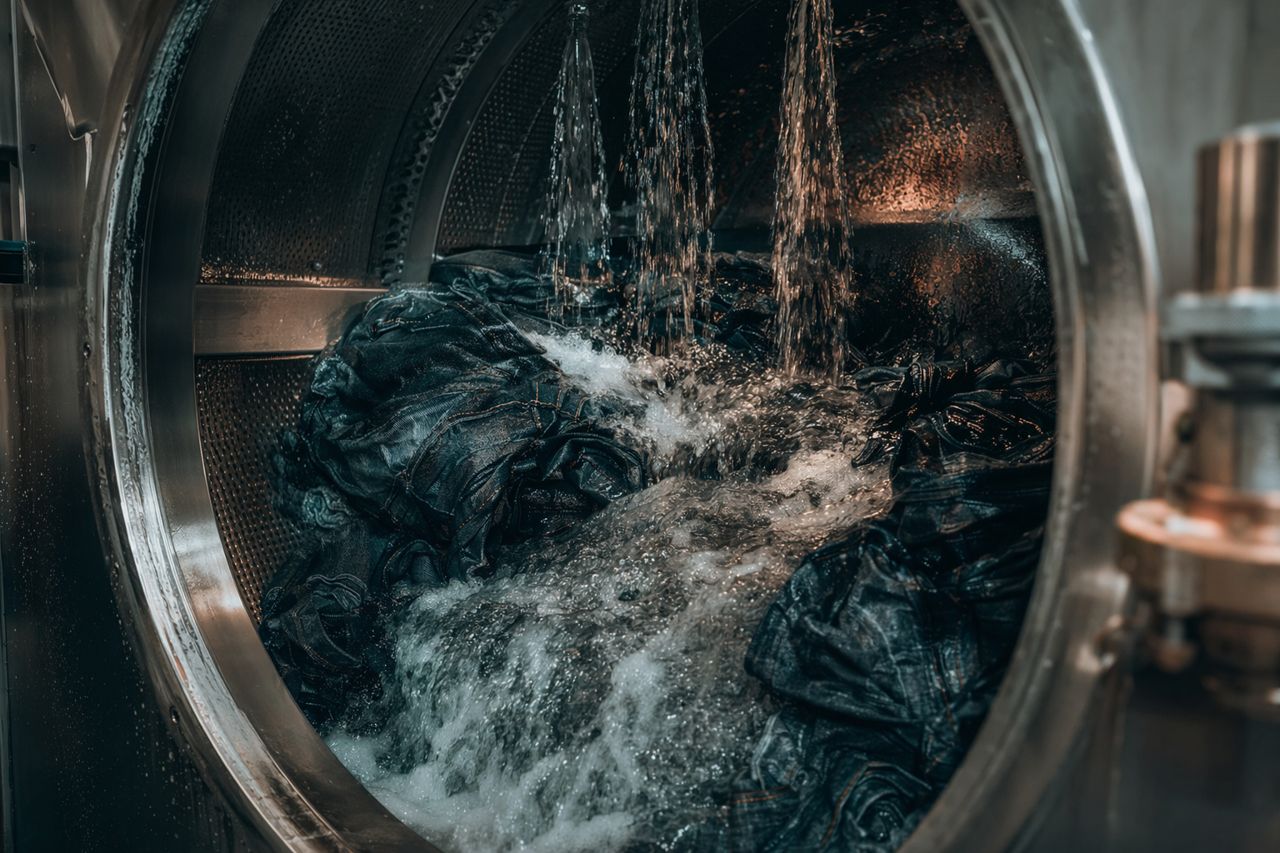
In denim finishing, laccase can help modify indigo-rich surfaces and support cleaner shade development when used within a controlled wet process. Typical evaluation targets include:
- Cast adjustment and surface color modulation
- Cleaner wash-down aesthetics
- Reduced reliance on aggressive oxidation routes
- Lower backstaining tendency when paired with appropriate anti-backstaining and rinse strategy
- Improved process selectivity compared with broad chemical attack
The best results come from trials that compare untreated controls, existing wash recipes, and laccase-assisted recipes on the same garment or fabric lot.
Dye decolorization and side-stream treatment
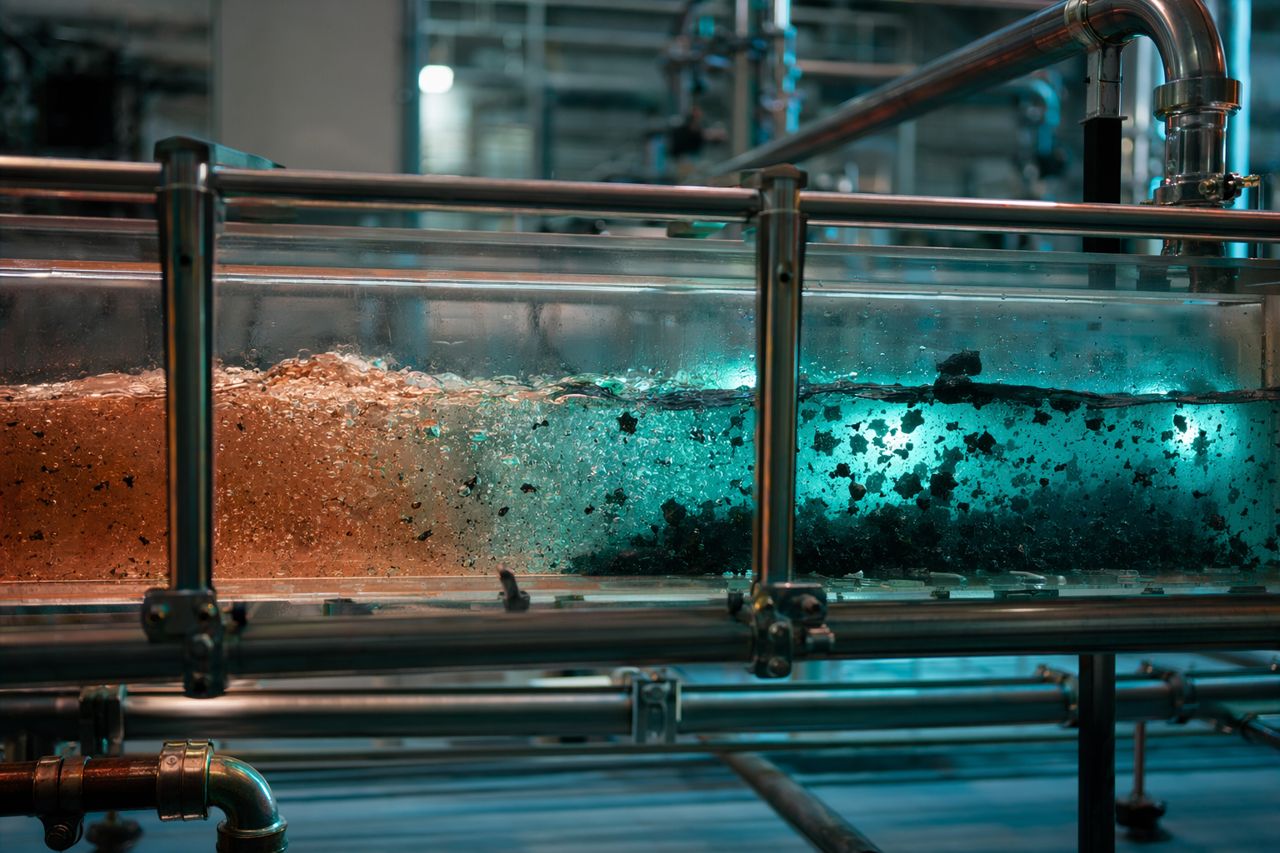
Laccase can act on selected phenolic and aromatic dye structures, supporting decolorization or transformation in defined side streams. In practice, this is most useful where the textile operation can control contact time, solids handling, aeration, and downstream separation.
Potential fit areas include:
- Dyehouse rinse or side streams containing compatible chromophores
- Phenolic color bodies from natural or specialty dye systems
- Process water polishing before a main treatment stage
- Pre-treatment steps that reduce color load into effluent handling
Performance depends heavily on dye chemistry. Bench screening is essential before scale-up.
Oxidative finishing with lower-impact positioning
For brands and mills under pressure to reduce harsh chemistry, laccase can support more measured finishing strategies. It may help reduce the intensity or frequency of certain oxidative steps when the shade target and fabric construction are compatible.
The commercial question is not only whether laccase works on a swatch. It is whether it works repeatably across garment lots, machine loading, water quality, auxiliary packages, and production scheduling.
Process fit: what to control
Bath environment
Laccase typically favors acidic to near-neutral operating windows, with performance influenced by the specific formulation and textile chemistry. Temperature should be selected to balance enzyme response, fabric safety, machine conditions, and process economics.
Critical variables include:
- pH profile across the treatment step
- Temperature exposure and hold time
- Dissolved oxygen availability
- Liquor ratio and mechanical action
- Fabric construction, yarn type, and finish residues
- Indigo depth, dye class, or color body chemistry
- Rinse design and enzyme deactivation strategy
Oxygen access
Because laccase is oxygen-driven, bath movement and air exchange matter. Poor oxygen transfer can limit the reaction even when enzyme, substrate, and pH appear suitable. In scale-up, oxygen access should be checked alongside shade repeatability and machine-to-machine variation.
Compatibility with auxiliaries
Laccase can be compatible with many textile auxiliaries, but the full recipe must be checked. Strong reducing agents, high peroxide exposure, harsh oxidants, sulfite-rich systems, and aggressive metal chelation can suppress performance or shorten useful enzyme life. Surfactants, buffers, dispersants, anti-backstaining agents, and softeners should be screened in the actual process sequence rather than evaluated in isolation.
Formulation and supply options
Laccase Enzyme Solutions can support laccase selection for textile programs in liquid or dry formats depending on dosing preference, plant handling, storage model, and formulation requirements.
Common buyer considerations include:
- Liquid versus dry handling preference
- Compatibility with existing textile auxiliary systems
- Storage and transport conditions
- Packaging size and discharge method
- Dust management for dry products
- Documentation requirements for internal EHS and quality review
- Lot traceability and supply continuity
We do not frame textile enzyme selection around public activity-unit comparisons. For industrial buyers, the more useful measure is performance against the actual fabric, dye system, bath design, and production target.
Trial design for mills and garment laundries
A practical laccase trial should be structured to answer process questions, not just produce a visually interesting swatch.
Recommended trial outputs include:
- Shade and cast comparison against current process
- Backstaining assessment on pocketing, labels, and contrast panels
- Color fastness after finishing sequence
- Tensile retention and fabric hand evaluation
- Reproducibility across fabric lots or garment loads
- Impact on rinse demand and downstream water color
- Compatibility with existing auxiliaries
- Clear deactivation and post-treatment plan
For dye decolorization or effluent-side applications, add color reduction tracking, solids formation, filtration or settling behavior, and integration with the plant treatment train.
When laccase is a strong candidate
Laccase is worth evaluating when your process needs controlled oxidation, color-body transformation, or a lower-impact alternative to more aggressive chemistry.
It is especially relevant when:
- The target substrate includes indigo, phenolic structures, or compatible aromatic color bodies
- You can control pH, time, temperature, and oxygen access
- You need better selectivity than broad oxidant treatment
- Your team can run side-by-side shade and quality comparisons
- The process has a defined rinse, neutralization, or deactivation stage
When another route may be better
Laccase may not be the best option if the process requires rapid non-selective bleaching, if the dyestuff is not a suitable oxidative substrate, or if the bath contains incompatible reducers or oxidants that cannot be changed. Laccase Enzyme Solutions can help screen these constraints early so development time is not wasted.
Request a quote for laccase
Laccase Enzyme Solutions supplies laccase wholesale to denim mills, garment laundries, textile finishers, textile chemical formulators, distributors and resellers. Price, pack size and lead time are quoted per order.
To get a quote, send:
- the fabric type, target effect (wash-down, shade adjustment, backstaining control or dye decolorization) and current process outline
- the quantity you need per order, or your expected monthly volume
- the destination country
- liquid or powder preference, and process pH and temperature if known

More from Laccase Enzyme Solutions
Laccase for Bioremediation and Micropollutant Treatment: Bulk Supply | Laccase Enzyme Solutions
Laccase for Biosensors and Functional Materials | Laccase Enzyme Solutions
Laccase for Cosmetic and Personal Care Formulation Research | Laccase Enzyme Solutions
Laccase for Food Processing & Ingredient Modification | Laccase Enzyme Solutions
Laccase for Green Oxidation Chemistry | Laccase Enzyme Solutions
Laccase for Lignin-Based Biomaterials | Laccase Enzyme Solutions
Request pricing & specs
Tell us your application and volume — we reply with pricing and lead time.
We have received your message. We will reply by email.