

Laccase and Phenolic Compounds | Industrial Oxidation Guide
A technical guide to how laccase oxidizes phenolic compounds for polyphenol control, color stability, flavor management, pulp treatment, textiles, and wastewater applications.
Laccase turns phenolics into controllable process chemistry
Laccase (benzenediol:oxygen oxidoreductase) is an oxygen-driven oxidoreductase used to modify phenolic compounds without adding harsh oxidants. In practical terms, it helps process teams convert reactive phenols, polyphenols, lignin fragments, tannins, catechols, and related aromatic compounds into less soluble, more stable, or more easily separated forms.
The value is not simply that laccase “oxidizes phenols.” The value is that it can shift color, flavor, extract stability, pulp brightness, fiber surface behavior, or wastewater treatability under comparatively mild processing conditions.
For B2B buyers, the central question is application fit: what phenolic load is present, what transformation is desired, and how much control is available over oxygen, pH, contact time, solids, and downstream separation.
Laccase Enzyme Solutions supplies laccase to beverage and extract processors, pulp and paper mills, textile finishers, wastewater operators, formulators, distributors and resellers who need to control phenolic chemistry in production. Every order is quoted individually.
Wholesale and bulk supply. For manufacturers, distributors and resellers. Send the phenolic challenge and application, the quantity you need and the destination country; every order is quoted individually. Request a quote
How laccase oxidizes phenolic compounds
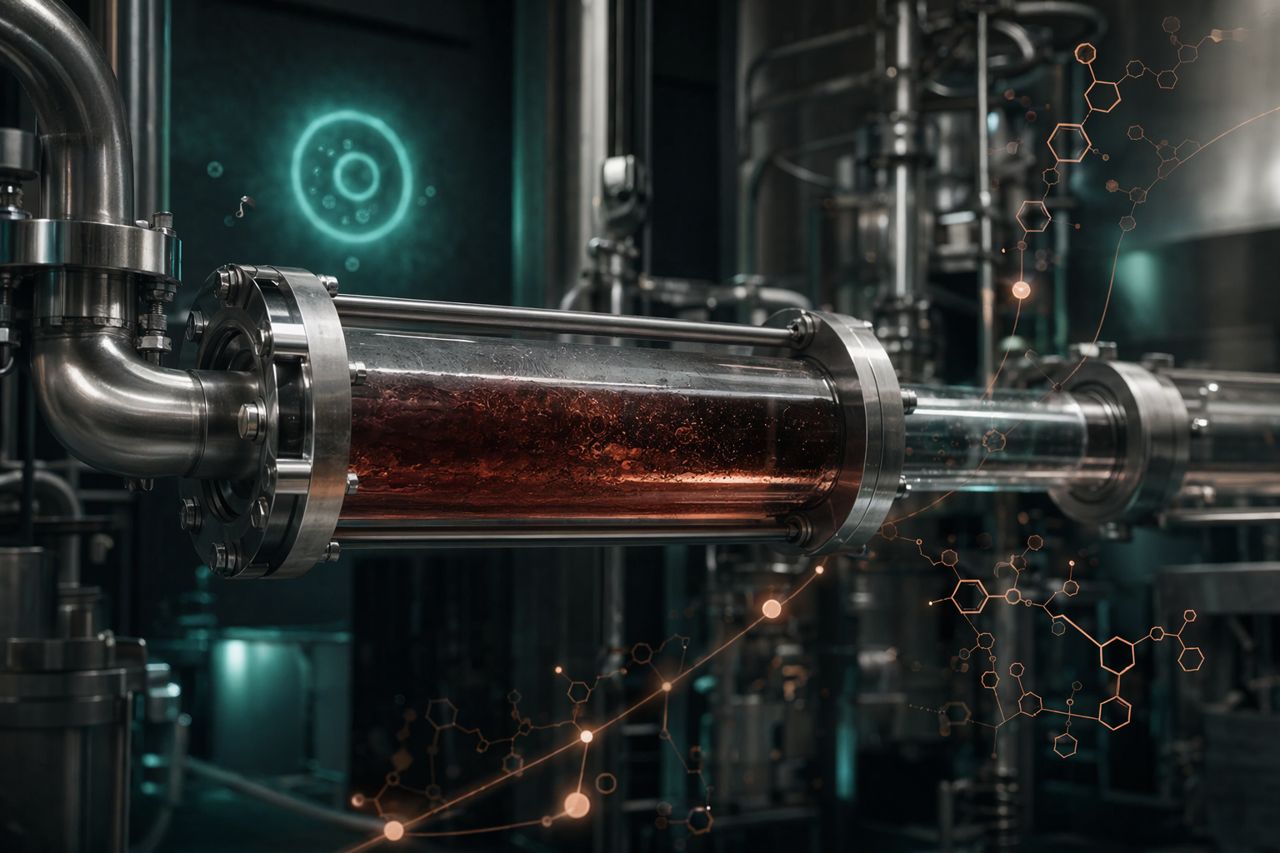
Laccase contains copper-active sites that accept electrons from phenolic substrates and transfer them to oxygen. Oxygen is reduced to water while the phenolic compound is converted into a reactive radical intermediate.
Those radicals can then follow several useful pathways:
- Coupling and polymerization — small phenolics form larger, less soluble structures.
- Quinone formation — certain substrates move into more reactive oxidized states.
- Color body modification — chromophoric phenolics are transformed, reduced, or redirected depending on matrix chemistry.
- Lignin and tannin restructuring — complex polyphenolic networks become easier to manage in pulp, beverage, extract, or effluent systems.
- Functional surface changes — phenolic groups on fibers, lignocellulosic materials, or plant-derived solids can be crosslinked or activated.
Because molecular oxygen is the terminal electron acceptor, laccase is often considered where buyers want oxidative performance without peroxide-heavy chemistry, high-temperature treatment, or aggressive mineral oxidants.
Phenolic substrates commonly targeted
Laccase is relevant across a broad phenolic spectrum. Typical substrate families include:
Simple phenols and substituted phenols
These can appear in industrial effluents, plant extracts, fermentation-derived streams, specialty chemical residues, and process wash waters. Laccase may be used to reduce soluble phenolic content by converting smaller molecules into higher-molecular-weight products that can be clarified, filtered, precipitated, or adsorbed.
Catechols, guaiacols, and syringyl-type compounds
These structures are common in lignin-rich streams, wood processing, pulp applications, smoke-related flavor chemistry, and botanical extracts. Their oxidation behavior is often fast, but process control is important because color formation and polymer structure depend strongly on pH, oxygen transfer, and residence time.
Tannins and polyphenols
In wine, tea, juice, plant extracts, and botanical ingredients, polyphenols influence haze, browning, astringency, antioxidant profile, and long-term color stability. Laccase can be used to selectively reduce or restructure reactive fractions when the process is designed around product quality rather than maximum oxidation.
Lignin fragments and lignocellulosic phenolics
In pulp, paper, biomass, and fiber treatment, laccase can modify phenolic lignin structures. With the right process design, this supports delignification assistance, brightness improvement, fiber functionalization, pitch control, or improved downstream chemical efficiency.
What changes after laccase treatment?
A successful laccase process usually produces one or more of the following outcomes:
- Lower soluble phenolic load
- Reduced tendency toward enzymatic or oxidative browning
- Improved clarification or filterability after polymer formation
- Modified color tone or lower color intensity
- Stabilized flavor profile in sensitive beverage or extract systems
- Better management of lignin-derived compounds
- Improved separation of phenolic contaminants from wastewater
- Surface activation or crosslinking on natural fibers
The exact result depends on matrix composition. Laccase is substrate-selective, but the surrounding formulation decides whether oxidation improves clarity, causes haze, reduces harshness, deepens color, or builds removable polymers.
Application areas for laccase and phenolic control
Beverage, wine, juice, and plant extract stabilization
Polyphenols are useful, but reactive polyphenols can create haze, browning, bitterness, astringency drift, and shelf-life variation. Laccase can help modify selected phenolic fractions before final stabilization.
In beverage and extract systems, process teams should evaluate:
- Target sensory outcome: reduced harshness, improved color stability, lower browning risk, or improved clarity
- Oxygen availability during treatment
- Whether treatment happens before or after clarification
- Impact on aroma-sensitive compounds
- Interaction with sulfites, ascorbate, metals, proteins, and natural antioxidants
- Whether oxidized phenolics are removed, retained, or further processed
For premium products, laccase is rarely a “dose and forget” enzyme. It is a controlled oxidation step that should be validated against sensory, color, turbidity, and shelf-life targets.
Pulp, paper, and lignin-rich streams
In pulp and paper operations, phenolic structures are embedded in lignin and lignin-derived fragments. Laccase can support oxidative modification of those structures, often as part of a broader fiber or bleaching strategy.
Typical goals include:
- Reducing residual lignin contribution to color
- Supporting lower-intensity chemical treatment downstream
- Improving brightness development in compatible sequences
- Modifying lignin-rich side streams
- Assisting pitch and extractives management where phenolic components are involved
Process fit depends on pulp type, residual lignin character, pH, temperature, retention time, oxygen transfer, and compatibility with existing process chemicals.
Textiles, fibers, and surface modification
Laccase can oxidize phenolic groups associated with natural fibers, lignocellulosic textiles, and certain dye or finishing systems. The resulting radical chemistry may support controlled crosslinking, shade modification, wash-down effects, or surface functionalization.
For textile and fiber buyers, the key questions are practical:
- Is the target phenolic group accessible on the fiber surface?
- Is oxidation intended to remove color, develop color, or bind another component?
- Will the process run in batch, pad, spray, or continuous format?
- How will oxygen transfer be maintained across fabric load and liquor ratio?
- Are surfactants, salts, reducing agents, or dyes compatible with laccase performance?
Phenolic wastewater and process effluents
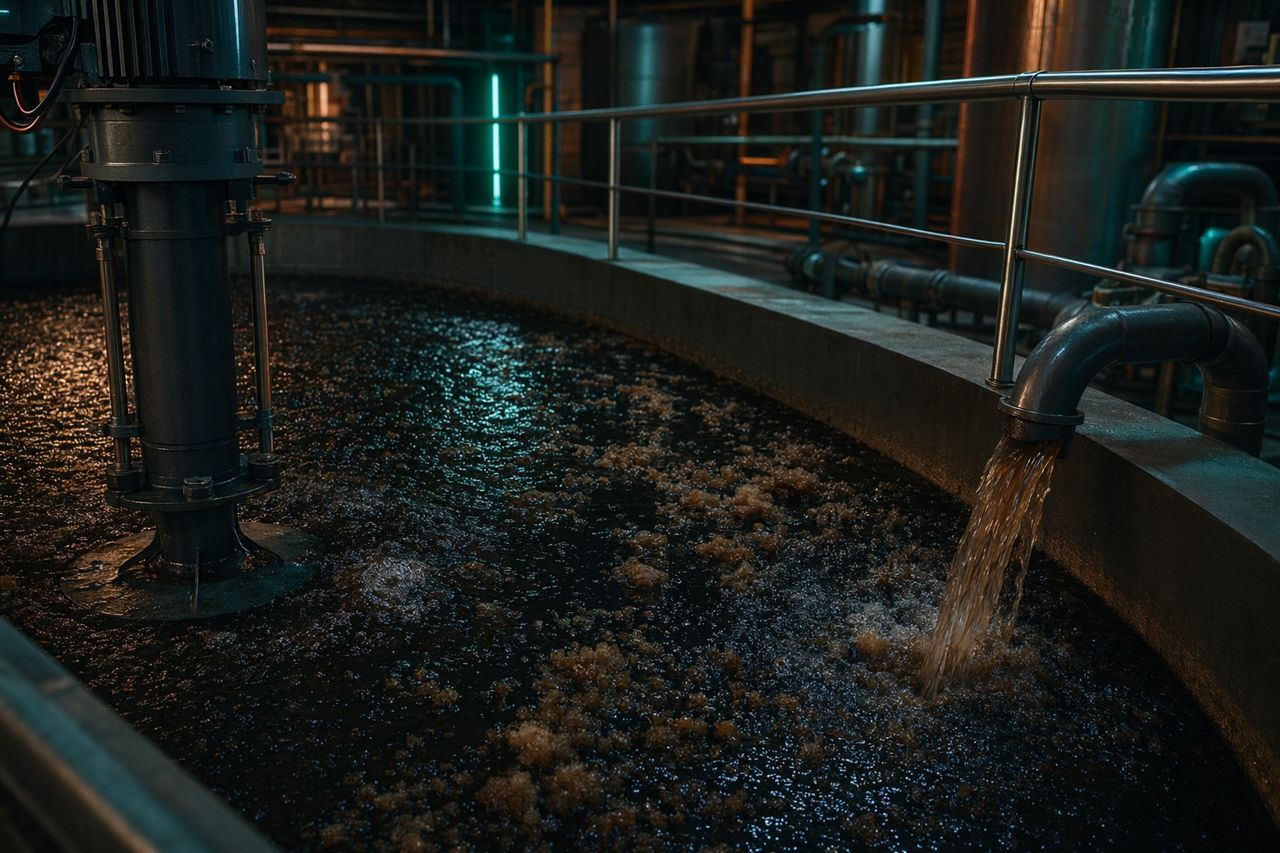
Phenolic contaminants can be difficult to treat when they remain soluble, colored, toxic to downstream biology, or variable from batch to batch. Laccase can oxidize certain phenolic compounds into higher-molecular-weight products that are more amenable to coagulation, flocculation, sedimentation, filtration, or adsorption.
Useful evaluation metrics include:
- Reduction in soluble phenolic fraction
- Change in color and UV-visible absorbance profile
- Improved compatibility with biological treatment
- Sludge volume and dewaterability after polymer formation
- Chemical oxygen demand shift, not just apparent color reduction
- Robustness across feed variability
Laccase is not a universal wastewater treatment. It is strongest when the phenolic chemistry is well characterized and the downstream separation step is designed with the oxidation products in mind.
Operating factors that decide performance
pH window
Many industrial laccase treatments perform best from mildly acidic to near-neutral conditions, with the preferred range depending on enzyme source, substrate class, and matrix. Phenolic oxidation can be rapid under acidic conditions, but product quality may require a narrower window.
Temperature
Laccase is usually applied at moderate process temperatures compatible with product quality and equipment constraints. Higher temperatures may increase reaction rate but can shorten enzyme lifetime or intensify non-enzymatic oxidation.
Oxygen transfer
Oxygen is not just background air. It is the co-substrate. Poor mixing, high solids, viscous extracts, or sealed tanks can limit reaction progress even when enough enzyme is present. Aeration, headspace, agitation, residence time, and foam control all matter.
Substrate concentration and accessibility
Free soluble phenolics behave differently from phenolics trapped in particles, fibers, emulsions, or lignin-rich solids. Accessibility often matters more than total phenolic number.
Inhibitors and reducing compounds
Sulfites, ascorbate, strong reducing agents, chelators, certain metals, preservatives, and residual sanitizers can suppress or redirect laccase chemistry. Compatibility screening should include the real process matrix, not only a model phenol solution.
Downstream separation
If the goal is phenolic removal, the process is only complete when oxidized products are separated or stabilized. Clarification, filtration, centrifugation, flocculation, adsorption, or settling should be evaluated alongside the enzyme step.
When mediators are considered
Laccase naturally oxidizes many phenolic substrates. Some less accessible or higher-redox compounds may require a mediator system to transfer oxidation beyond the enzyme’s direct substrate range.
Mediator selection is application-sensitive. Buyers should consider regulatory status, residue expectations, cost, odor, color formation, downstream removal, and compatibility with the final product. In food, beverage, and ingredient applications, mediator use requires especially careful review.
Formulation and procurement considerations
When specifying laccase for phenolic compound applications, procurement and technical teams should align on the process outcome before discussing supply format.
Important commercial questions include:
- Is the goal color reduction, stabilization, clarification, flavor control, delignification assistance, surface modification, or wastewater treatability?
- What phenolic families are present?
- Is the matrix liquid, slurry, fiber, pulp, extract, or effluent?
- What pH and temperature are fixed by the existing process?
- Is oxygen transfer available or must equipment be adapted?
- Are there known inhibitors, preservatives, reducing agents, or strong chelators?
- What downstream separation method is planned?
- Does the application require food-contact, technical, textile, pulp, or wastewater suitability?
- Is the preferred supply liquid, granulated, immobilized, or process-ready blend?
The right laccase is not selected by a generic label. It is selected by substrate fit, matrix tolerance, process compatibility, and the quality target that defines success.
Pilot trial design: what to validate before scale-up
A useful pilot does not need to be complicated, but it must reflect the real process. Recommended evaluation points include:
- Untreated control with the same oxygen exposure and mixing.
- Laccase treatment range across realistic contact times.
- pH and temperature bracket around the expected operating point.
- Oxygen condition comparison such as static, agitated, or aerated treatment.
- Downstream separation test after oxidation, not before.
- Quality readouts relevant to the product: color, turbidity, flavor, haze, filterability, phenolic profile, or effluent treatability.
- Hold-time stability to confirm that the treated matrix remains stable after processing.
For procurement teams, this trial structure helps avoid overbuying, under-specifying, or selecting an enzyme that performs in a lab model but not in production.
Common reasons laccase projects underperform
- The phenolic target is poorly defined.
- Oxygen transfer is assumed rather than engineered.
- The enzyme is evaluated without the real inhibitors present.
- Oxidized products are created but not removed or stabilized.
- Contact time is too short for polymer formation.
- Product quality is judged only immediately, not after shelf-life or storage.
- A mediator is added without considering residue, cost, or sensory impact.
- The application needs selective oxidation, but the trial is designed for maximum oxidation.
Laccase is precise when the process is precise. It becomes unpredictable when substrate chemistry, air handling, and separation are left undefined.
Request a quote for laccase
Laccase Enzyme Solutions supplies laccase wholesale to beverage and extract processors, mills, textile finishers, wastewater operators, formulators, distributors and resellers. Price, pack size and lead time are quoted per order.
To get a quote, send:
- the phenolic challenge and the application (beverage, extract, pulp, textile or wastewater)
- the quantity you need per order, or your expected monthly volume
- the destination country
- liquid or powder preference, and process pH and temperature if known

More from Laccase Enzyme Solutions
Laccase for Bioremediation and Micropollutant Treatment: Bulk Supply | Laccase Enzyme Solutions
Laccase for Biosensors and Functional Materials | Laccase Enzyme Solutions
Laccase for Cosmetic and Personal Care Formulation Research | Laccase Enzyme Solutions
Laccase for Food Processing & Ingredient Modification | Laccase Enzyme Solutions
Laccase for Green Oxidation Chemistry | Laccase Enzyme Solutions
Laccase for Lignin-Based Biomaterials | Laccase Enzyme Solutions
Request pricing & specs
Tell us your application and volume — we reply with pricing and lead time.
We have received your message. We will reply by email.